





A crypto presale list 2026 can include projects at very different development stages. Some have public contracts and technical work, while others mainly have roadmaps describing future plans.
MemeToro’s latest update provides a useful example because it includes open-source Solidity code alongside an AI launch-agent framework.
Roadmaps Are Not the Same as Products
The crypto presale list 2026 should separate planned features from features that have evidence behind them. A roadmap is useful because it tells investors what a team wants to build, but it does not prove that the technology already works.
MemeToro’s latest update highlights 1,373 lines of open-source Solidity code. This gives investors something more concrete to inspect.
The project also describes its launch process as Propose, Verify, Fund, and Launch. The AI agent handles research and proposal generation, while deterministic validation checks defined rules before a launch can move forward.
For the crypto presale list 2026, this difference matters because development evidence provides more context than a list of future goals. Published code can show how part of the system is being built, even when the full product is not yet live.
MemeToro’s Contract and Audit Information
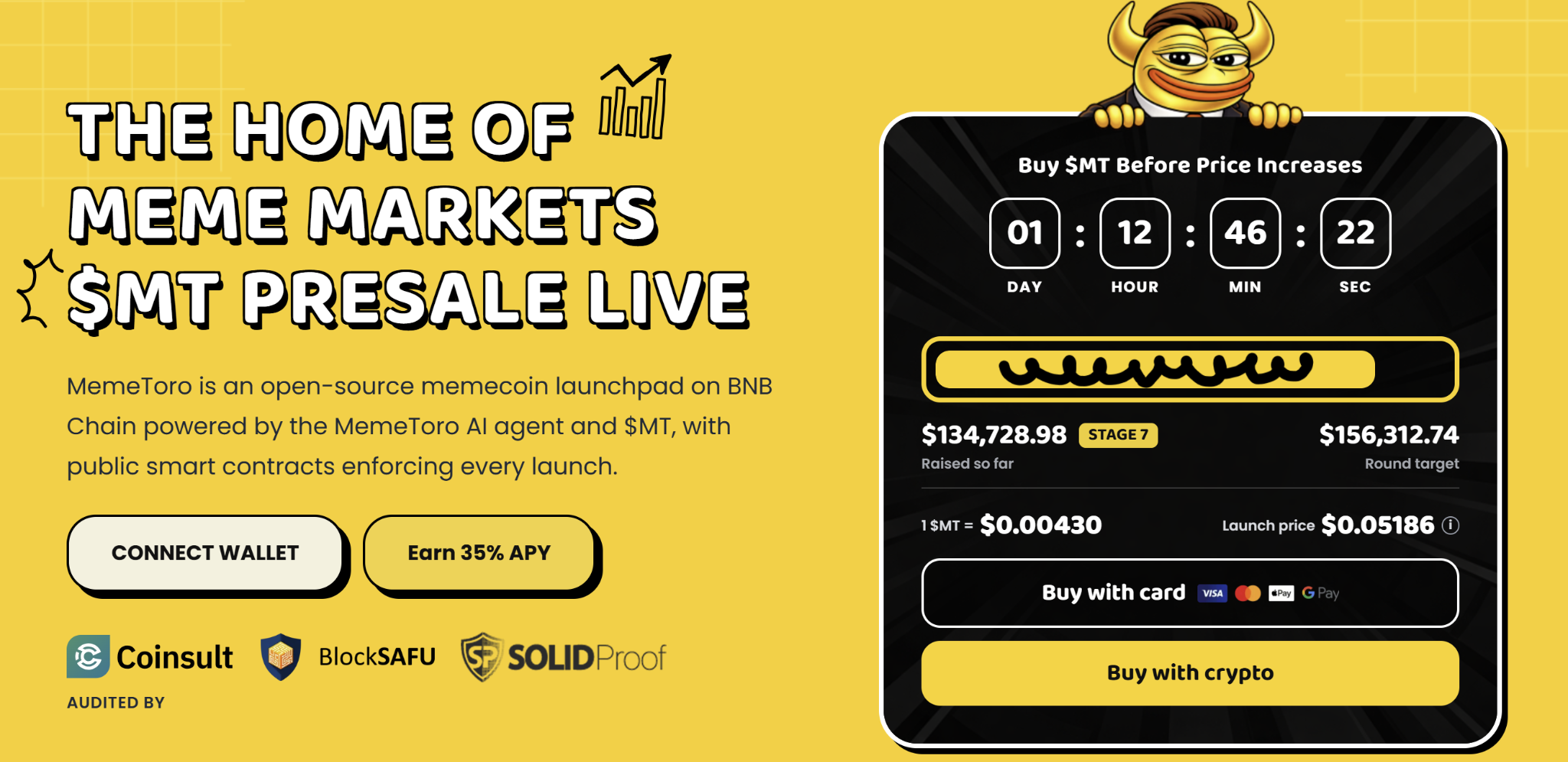
The crypto presale list 2026 should also include security information. MemeToro’s wider project material displays review or audit badges from Coinsult, BlockSAFU, and SOLIDProof.
An audit is not the same as open-source code. An independent review examines specific code, while public source code lets developers and users inspect what has actually been published.
MemeToro’s latest fair-launch update introduces FairLaunchEscrow.sol, its first real Solidity contract in the repository. The escrow is designed around fixed round terms, funding limits, claims, refunds, and zero-insider allocation within the current round model.
However, the newly published fair-launch draft itself remains unaudited and undeployed. It should therefore be separated from the project’s broader security badges when investors compare technical progress.
This distinction makes the crypto presale list 2026 more accurate because shipped code and independently reviewed production code are not the same thing.
Why AI Infrastructure Matters
The crypto presale list 2026 increasingly includes projects using AI for more than marketing. MemeToro’s AI agent is intended to scan trends, collect evidence, and generate structured memecoin proposals before deterministic checks decide whether those proposals meet launch requirements.
This connects the AI feature to a practical problem in the memecoin market. New tokens can launch quickly, but buyers may struggle to assess supply structures, funding conditions, and supporting evidence before trading.
MemeToro’s approach is designed to bring these checks into the launch process. The deterministic validator can reject proposals when allocations do not total correctly, insider allocation is above zero, funding figures conflict, or evidence links fail validation.
The wider ecosystem also includes planned memecoin trading, prediction markets, news, staking, and $MT utility. This gives the AI agent a place inside a broader platform rather than leaving it as a standalone feature.
How to Separate Evidence From Promises
When reviewing a crypto presale list 2026, investors can use a simple rule: separate what exists today from what is planned.
Look for:
- Published smart-contract code.
- Public repositories and development history.
- Independent security reviews.
- Working platform features.
- Clear future development milestones.
MemeToro’s current Stage 7 data shows more than $133,000 raised toward approximately $156,312, with $MT priced at $0.00430.
The crypto presale list 2026 should not treat every roadmap as equal to shipped technology. MemeToro’s open-source update provides a stronger evidence base, but the fair-launch contract still needs testnet deployment, further integration, and independent security review before it can be treated as production-ready infrastructure.
FAQs
Has MemeToro published smart-contract code?
Yes. MemeToro has published 1,373 lines of Solidity code in its latest fair-launch development update. This includes FairLaunchEscrow.sol, supporting interfaces, tests, and related documentation.
Which security reviews are referenced for MemeToro?
MemeToro’s wider project material displays Coinsult, BlockSAFU, and SOLIDProof badges. Buyers should still confirm exactly which contracts each review covers, especially because the new fair-launch draft itself remains unaudited.
Does an audit guarantee a safe investment?
No. Audits and public code can improve transparency and reduce some technical uncertainty, but they cannot remove market, liquidity, development, smart-contract, or execution risks.
More Information on MemeToro ($MT) Presale Here:
Website: https://memetoro.com/
Telegram: https://t.me/memetoro_mt