




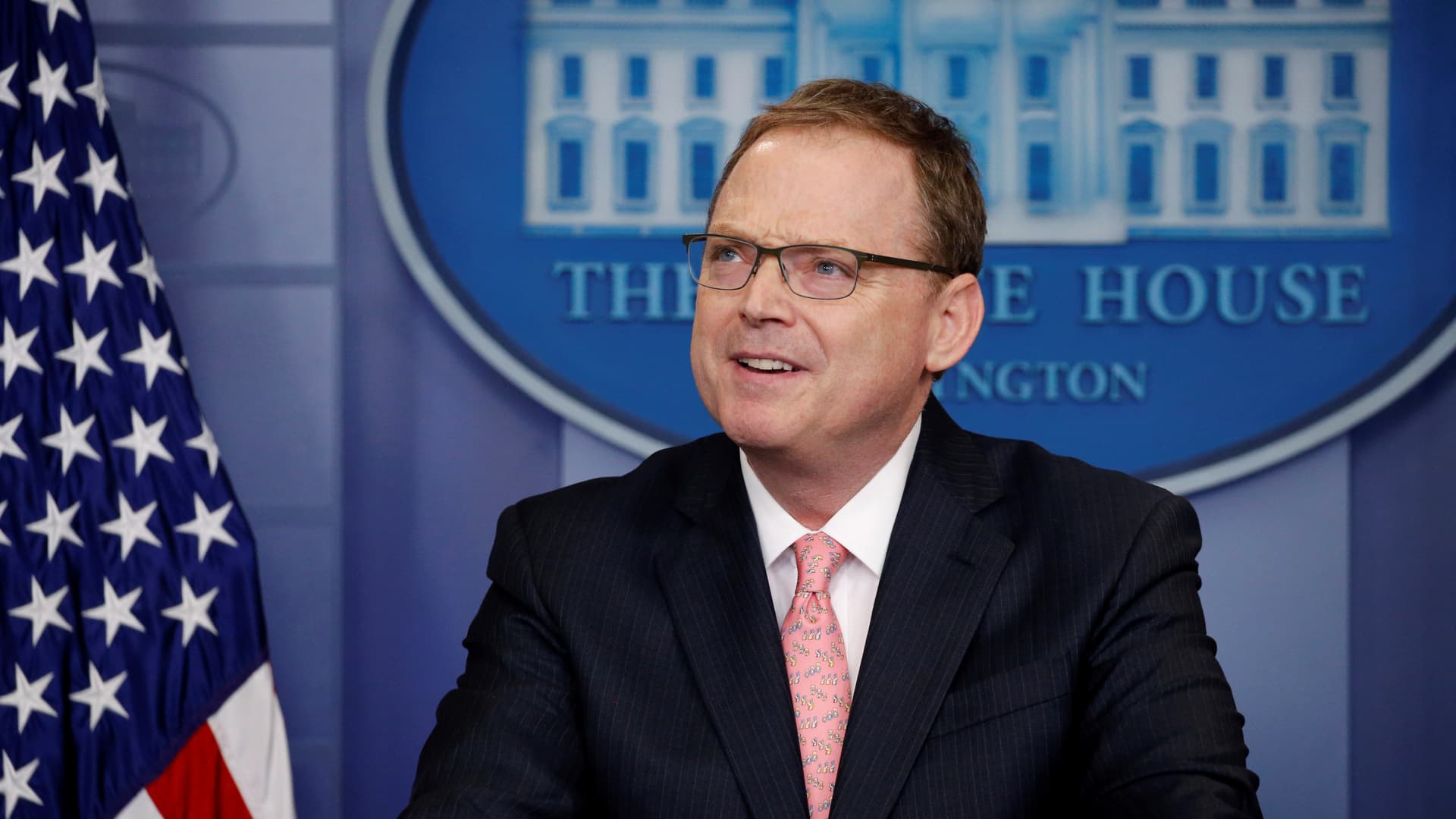
Ahead of the Fed's interest rate meeting this week, White House National Economic Council Director Kevin Hassett, who is seen by markets as the new Fed Chair candidate, delivered striking messages on CNBC's Squawk Box program regarding monetary policy, inflation, the “affordability” agenda, and President Donald Trump's economic and artificial intelligence plans.
Hassett stated that current Chairman Jerome Powell is “well-managing” the Federal Open Market Committee (FOMC) and believes a 25 basis point rate cut would be appropriate at this meeting. Recalling that committee members recently appeared “sharply divided,” Hassett noted that Powell “managed to rally” them toward the midpoint indicated by futures markets. However, Hassett refrained from offering any numerical guidance on the potential interest rate path, saying, “We still have incomplete data due to the government shutdown, and we need to see the back-to-back employment reports. Committing now for six months would be irresponsible.”
Hassett, stating that inflation still hovering around 3% is “the fundamental question on everyone's mind,” said the debate is increasingly centered around “affordability.” Arguing that 20-23% of price increases occurred during the Biden administration, Hassett noted that, despite this, there has been a gradual recovery in real living standards this year, with the average American's purchasing power increasing by approximately $1,200 by 2025.
Hassett noted that real wages have risen by around 2.5 percent annually in recent months, arguing that this is a reflection of “positive supply shocks.” He argued that, just as productivity growth from information technologies in the 1990s has been a factor, artificial intelligence (AI) and productivity advancements today can support growth while reducing price pressures. Still, he added, “Inflation hurts everyone in the economy, and the last election was largely a vote on inflation.”
Hassett explained that the Trump administration's “affordability” agenda is being addressed not only through prices but also through financing conditions. He stated that one of the White House's goals is to further reduce mortgage and auto loan interest rates through actions taken by the Fed. He noted that movements in long-term interest rates and 10-year bond yields are sensitive to the Fed's communication, as are fluctuations in market inflation expectations. Despite this, he noted that the bond market is “in a much better place” compared to the beginning of the year, and that there is room for further reductions in 10-year yields in a scenario where inflation declines alongside growth.
Hassett, who stated that the White House will announce “a lot of positive news” on the economic front this week, noted that approximately 30 of the trillions of dollars in new factory and investment announcements announced during the Trump era are now in the groundbreaking stages. He argued that tax policy will also change perceptions among voters, noting that thanks to measures such as tax exemptions for tips and overtime, the average worker is expected to earn an additional $1,600-$2,000 next year, a significant portion of which will be refunded at the beginning of the year. Recalling that household incomes increased by $6,500 following Trump's sweeping tax cuts in his first term, Hassett said, “Ultimately, people will look in their wallets and say, 'This president made me better off.'”
Hassett also addressed the executive order on artificial intelligence that President Trump plans to sign this week. Referencing Trump's message on Truth Social, “If we want to win the AI race, there must be a single rulebook,” Hassett said that some states want to regulate AI companies “for life” and impose heavy fines for errors, which could become a way for state governments on the brink of bankruptcy to extract revenue from tech companies. Hassett stated that Trump is unwilling to allow this, saying, “The executive order the president plans to sign will create a single, clear set of rules for US AI companies nationwide; companies won't have to obtain 50 different approvals in 50 states.”
He spoke about his potential Fed presidency.
When asked about a potential Fed chairmanship, Hassett avoided direct answers but said he gave President Trump “100% support” and was ready to serve regardless of the decision. Contrary to market debate, Hassett argued that Trump faced “a guaranteed good choice, not a difficult one.” He described current Fed member Christopher Waller as “one of the best monetary policy theorists of the last generation,” Michelle Bowman as “the best regulator in the world,” and Kevin Warsh as “one of the most experienced Fed members.” He added, “Whichever name the president chooses, he will be making a good decision.” Hassett described the Trump administration as “the most transparent administration I’ve ever seen,” adding that the president’s direct public expression of his thoughts provides clarity for both the markets and the team he works with.
*This is not investment advice.