




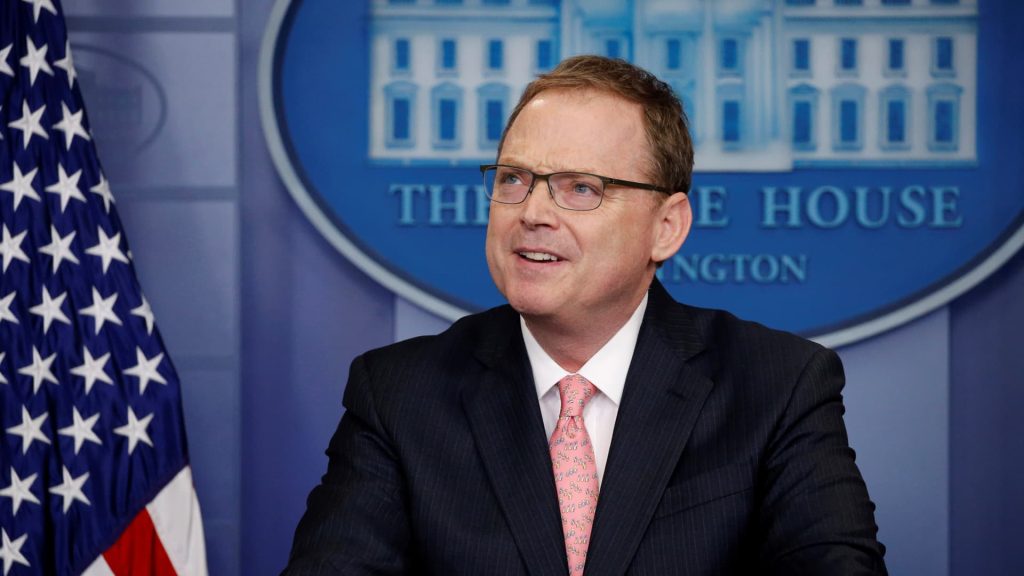
Kevin Hassett, director of the White House National Economic Council and a strong contender for the Fed chairmanship following the end of Jerome Powell’s term, made noteworthy assessments regarding the current outlook for the US economy.
Hassett painted an optimistic picture regarding growth, employment, inflation, and monetary policy.
Hassett stated that the strong growth in the US economy is based on a combination of falling prices and rising incomes, and that this combination supports economic activity. Arguing that people are quite optimistic about income growth, Hassett said that this optimism translates into a greater willingness to spend, thus boosting growth figures. He also noted that productivity increases driven by artificial intelligence are clearly reflected in economic data, adding that developments in this area are giving the US economy new momentum.
Touching upon the employment front, Hassett noted that if gross domestic product (GDP) growth remains around 4%, monthly employment growth could recover to the 100,000 to 150,000 range. While arguing that there is no strong correlation between consumer confidence and “harsh” economic data, Hassett stated that, despite this, consumers currently have a more positive outlook on their economic future.
Regarding monetary policy, Hassett criticized the Fed, saying the central bank was “behind the times” when it came to interest rate cuts. Describing the recently released growth figures as “a Christmas gift for the American people,” Hassett stated that these figures clearly demonstrated the strength of the economy. He also noted that the US budget deficit had been reduced by approximately $600 billion annually, arguing that progress had been made in terms of fiscal discipline.
Hassett also touched upon housing policies, saying that Donald Trump is considering many options to increase housing accessibility and that a new housing plan will be announced within the next year. According to Hassett, the steps taken in trade policies have also begun to yield concrete results.
On the other hand, US Treasury Secretary Scott Bessent stated that the Fed may revise its 2% inflation target as inflation approaches the 2% level again. Speaking on the “All-In” podcast, Bessent said that when inflation reaches 2%, setting the target as a band such as 1.5%-2.5% or 1%-3%, rather than a single point, might be healthier. Arguing that setting targets with decimal precision is unrealistic, Bessent warned that changing the target while inflation is high could create the perception that the target is constantly being pushed upwards. These statements were reportedly made after the release of November’s inflation data.
*This is not investment advice.