





At its March meeting, the Fed kept its policy interest rate unchanged at 3.5%–3.75%, in line with expectations.
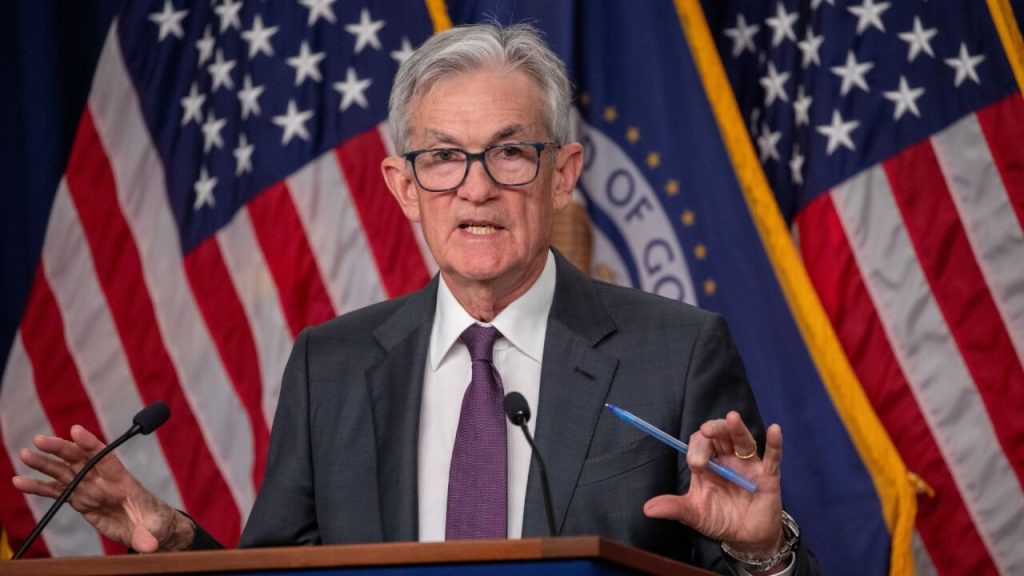
Now, Federal Reserve Chairman Jerome Powell is holding his highly anticipated press conference following the decision. Bitcoinsistemi.com will be providing you with live updates on the details from the press conference. Refresh the page for the latest information.
Here are Jerome Powell’s statements:
- The economy is growing.
- Inflation is still somewhat high.
- The monetary policy stance is appropriate.
- We support progress toward our two main goals.
- We will closely monitor all risks.
- The impact of developments in the Middle East remains unclear.
- Consumer spending remains resilient.
- Activity in the housing sector is weak.
- Our current monetary policy stance is helping us achieve our objectives.
- The unemployment rate has not changed much since last summer.
- PCE inflation for February is expected to be 2.8%, while core PCE inflation is expected to be 3.0%.
- High inflation largely reflects commodity prices.
- Inflation expectations have risen recently.
- It is too early to assess the extent and duration of the economic impact.
- The Fed is in a favorable position to decide on future interest rate adjustments.
- Rising energy prices will push overall inflation higher.
- Past interest rate cuts have helped stabilize the labor market.
- There is uncertainty about individual policymakers’ interest rate expectations, and the dot plot is not a predetermined plan or decision.
- The decision will be made separately at each meeting.
- Rising energy prices will push inflation higher, but it’s too early to assess the extent of this.
- It is too early to assess the total impact of the situation in the Middle East on the economy.
- The policy is not predetermined.
- We are fully aware that a series of inflationary shocks have hampered progress.
- Future inflation will be affected to some extent.
- Making progress in reducing commodity inflation this year is vital.
- To assess whether we have made progress, we first need to see an improvement in commodity inflation.
- Whether we can ignore energy inflation depends on whether we can contain commodity inflation.
- The assessment of fluctuations in oil prices depends on inflation expectations and the macroeconomic environment in which inflation has been above target for five consecutive years.
- Many people prefer to reduce the number of interest rate cuts.
- The median forecast for the trajectory of interest rates remained unchanged, but the number of those preferring fewer rate cuts increased significantly.
- An improvement in inflation is expected, but this improvement will not be as rapid as anticipated.
- Interest rates will not be cut unless inflation improves.
- We should have made progress on tariffs and inflation by mid-year.
- The dot plot shows that four out of five officials now favor reducing the number of interest rate cuts.
- We cannot become complacent by ignoring the issue of energy inflation.
- The upward revision of inflation forecasts is partly due to the oil shock, but it also reflects that inflation is not progressing as expected.
- Part of the oil shock will be reflected in core inflation.
- We believe progress will be made on tariff inflation, but this may take more time.
- Slow progress in tariff reductions is affecting our inflation forecasts.
- I want to emphasize that nobody knows the full extent of the economic impact of the Middle East conflict.
- We really don’t know what kind of impact rising energy prices will have.
- Prolonged high oil prices would reduce consumption, but whether this will happen is uncertain.
- If we were to skip the Summary of Economic Prospects (SEP), now would be a good time to do so.
- Economic growth is robust, and the main drivers of rising commodity inflation are commodity prices and tariffs.
- The threshold required to create new jobs is clearly too low.
- Oil companies want oil prices to continue rising and believe this upward trend will continue; therefore, they are increasing their production.
- The net effect of the oil shock will continue to put downward pressure on spending and employment, and will push inflation upward.
- The impact of the oil shock can be offset by strong US energy production.
- In fact, inflation has been running above target for five years, and we are concerned that any shock could create problems for inflation expectations. We are extremely committed to stabilizing inflation expectations at the 2% level.
- Policy interest rates are at the upper end of the neutral range or at a slightly tight level. Interest rates are currently on a threshold between tightening and non-tightening.
- For commodity inflation to fall back to previous levels, we expect interest rates to spread across the system.
- The decline in commodity inflation is not due to tightening policies.
- We do not want to implement overly tight policies because of the downside risks in the labor market.
- We are in a difficult situation and we have to balance the risks.
- The current policy stance is exactly at the right level.
- I believe it is important to keep interest rates moderately tight.
- It is disappointing that non-residential services inflation has not yet fallen.
- It is clear that the labor market is not the source of inflationary pressures.
- We expect continued progress in the residential services sector, ultimately leading to a decline in commodity inflation and support from the non-residential services sector as well.
- I wouldn’t say that the employment risk is greater than the inflation risk.
- The fact that inflation is well above the 2% target is worrying.
- If a new Federal Reserve Chairman is not appointed before my term ends, I will assume the role of interim chairman.
- The law requires it.
- I have no intention of leaving the committee until the Justice Department’s investigation is concluded.
- No decision has yet been made regarding whether I will remain in office after the Justice Department’s investigation concludes.
- Several employment indicators suggest that the labor market has a certain level of stability.
- I will prioritize the interests of the Fed and the public.
- This energy supply shock is a one-off event.
- A large majority of participants do not believe that an interest rate increase is the primary scenario.
- Today we discussed the potential two-pronged risks associated with interest rates.
- The possibility of raising interest rates as the next step has indeed been raised.
- The meeting discussed the possibility of shaping market expectations regarding a potential interest rate hike.
- Many people at this meeting mentioned the increase in short-term inflation expectations.
- When it comes to long-term inflation expectations, most of the indicators we examined suggest that these expectations are quite robust.
- Everyone agrees that inflation expectations will be monitored very closely.
- We are not currently experiencing stagflation like we did in the 1970s.
- It is impossible to predict how oil prices will behave after the war ends.
- We hope the increase in oil prices will not last too long.
- We considered various scenarios for the next meeting, but they are extremely vague.
- The US economy remains strong despite numerous challenges.
- I’m not at all sure that the tariffs will have only a one-off effect; I’m not sure at all.
- Inflation is a sustained rise in prices, not a one-time increase. Theoretically, tariffs should cause a one-time increase in prices.
- We don’t know how long it will take for the effects of customs duties to be felt on the economy.
- We expect to see a decline in tariff inflation around mid-year.
- Given the positive growth in real incomes, it will take a few more years for people to feel optimistic again.
- The energy shock may or may not have a significant impact on the economy.
The decision text highlighted the impact of the war in the Middle East on the economic outlook, adding that uncertainties were increasing. Officials stated, “The effects of developments in the Middle East on the U.S. economy remain uncertain,” noting that risks to both inflation and employment targets were being closely monitored.
The Federal Open Market Committee (FOMC) decided to keep interest rates unchanged with an 11-1 vote. Fed member Stephen Miran was the only dissenting vote, supporting a quarter-point rate cut. This marks the second consecutive meeting where the Fed has kept interest rates unchanged.
However, the economic outlook presents a more complex picture compared to the previous meeting. While signs of stability in the labor market were prominent in January, weak employment data released in February overshadowed this outlook. On the other hand, rising oil prices following the US-Israeli attacks on Iran that began on February 28th stand out as a risk that could put renewed upward pressure on inflation.
*This is not investment advice.