






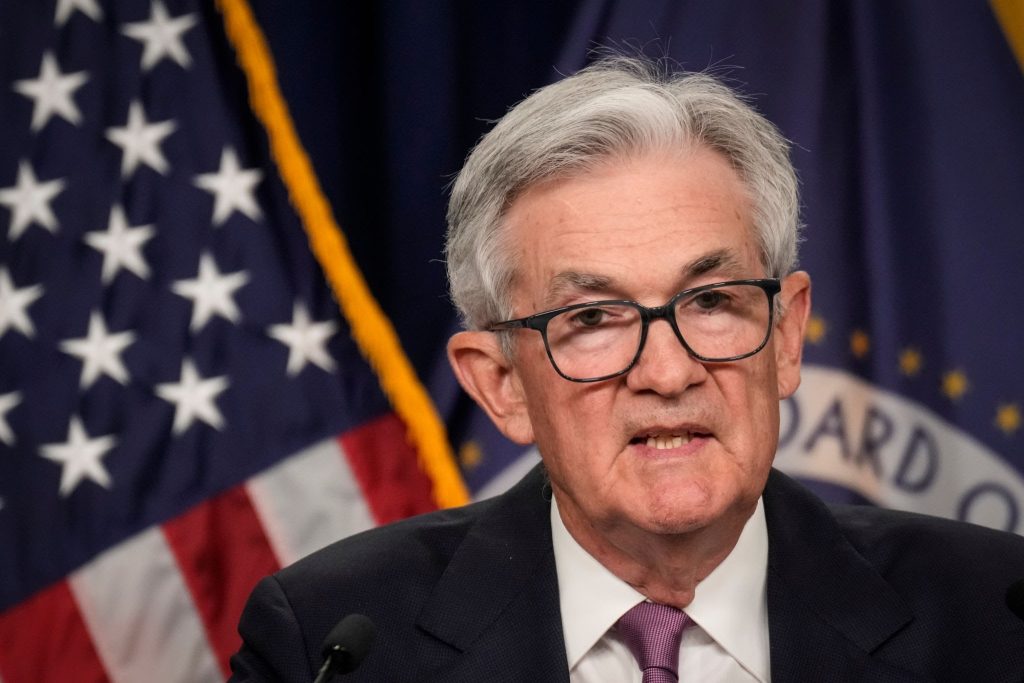
The criminal investigation launched by the US Department of Justice (DOJ) against Federal Reserve Chairman Jerome Powell has reignited debates about central bank independence and reinforced the view that global investors need to diversify away from US assets.
Powell’s assertion that political pressure was behind this move triggered volatility in the markets.
In a video statement released Sunday evening, Powell announced that the U.S. Department of Justice had issued a grand jury subpoena to the Fed on Friday, threatening him with criminal prosecution. While the investigation was justified by a statement he gave to the Senate Banking Committee last June regarding a Fed building renovation project, Powell stated that this was a “pretext” and that the real reason was his refusal to succumb to political pressure regarding interest rate decisions.
This development put pressure on US stock futures and the dollar. S&P 500, Dow Jones, and Nasdaq futures contracts fell, the dollar index weakened, and gold prices rose as a safe haven asset. Powell’s statement, emphasizing that the Fed makes interest rate decisions based on the public good rather than political preferences, triggered sharp price movements in the markets.
Barclays Private Bank Chief Market Strategist Julien Lafargue stated that this investigation is a clear warning from the Trump administration to the Fed. Speaking to CNBC, Lafargue said it reinforces the perception among global investors that they need to diversify away from US assets.
Standard Chartered’s senior analyst, Steve Englander, described the process as the “Maduro option.” According to Englander, this analogy alludes to Trump’s threat to pressure Powell into submission through political means, referencing a potential US military intervention against Venezuelan President Nicolás Maduro. Englander added that the speed of the process is causing concern in the markets.
Although Powell’s term ends in May, this move is of great importance in terms of its impact on central bank independence. Critics argue that allowing the Fed’s monetary policy decisions to be guided by political pressure could undermine economic stability.
*This is not investment advice.