




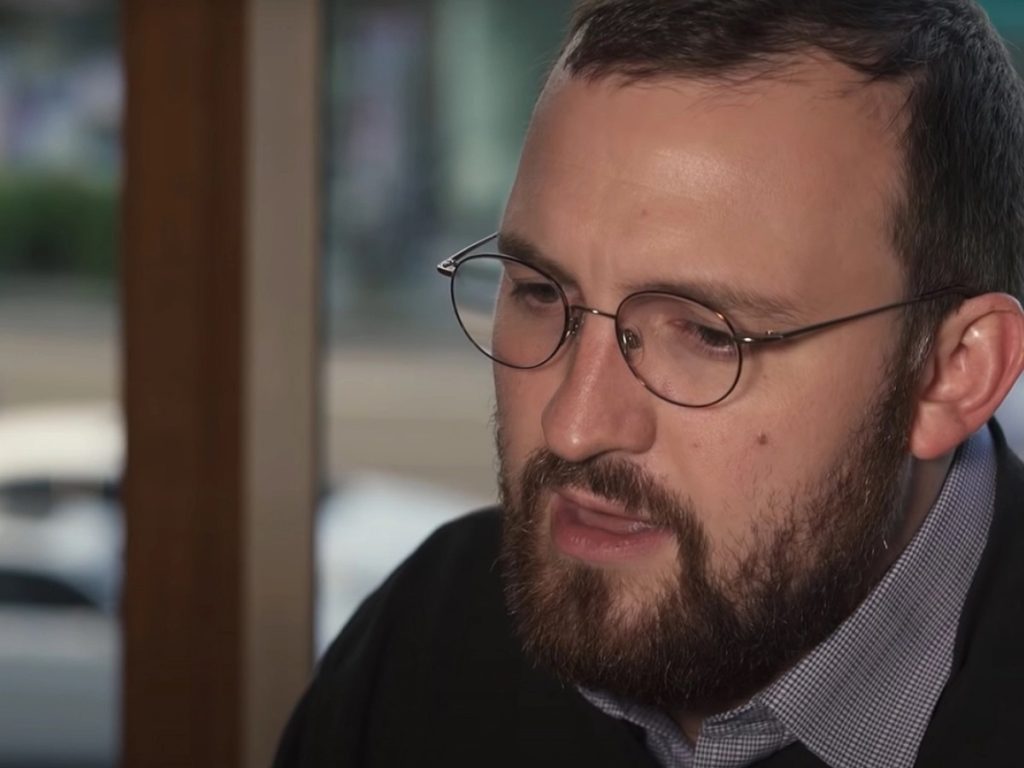
Cardano (ADA) founder Charles Hoskinson said that the cryptocurrency ecosystem will inevitably become quantum-computer-resistant (post-quantum), but that this will come at a serious cost.
According to Hoskinson, the real debate is not about what changes should be made, but when they should be made. The founder believes that taking premature steps could seriously weaken the performance of blockchain networks.
Hoskinson stated that the necessary cryptographic tools to defend against future quantum attacks already exist. In this context, he pointed to the post-quantum cryptography standards published by the US National Institute of Standards and Technology (NIST) in 2024. However, according to Hoskinson, the problem lies in the costs of implementing these new protocols before miners and validators are ready.
Hoskinson stated that post-quantum cryptography often runs up to 10 times slower, proof sizes increase, and overall efficiency decreases, adding, “When you adopt it, you’re essentially reducing blockchain transaction capacity by cutting out a zero.”
While researchers generally agree that sufficiently powerful quantum computers could one day break current cryptography, there is no clear consensus on when this threat will materialize. Estimates range from a few years to over a decade. Hoskinson noted that instead of relying on company timelines or exaggerated claims, the Quantum Benchmarking Initiative conducted by the US Defense Advanced Research Projects Agency (DARPA) offers a more reliable reference. This initiative tests whether different quantum computing approaches can actually produce useful results. DARPA has set 2033 as the target year to assess whether utility-scale quantum computing is feasible.
Today, most major networks, including Cardano, Bitcoin, Ethereum, and Solana, rely on elliptic curve cryptography, which, theoretically, could be broken by the Shor algorithm once sufficiently powerful quantum computers emerge. Hoskinson stated that the industry knows how to address this vulnerability, but the discussion is a matter of choice between two fundamental cryptographic approaches. Accordingly, there is a fork in the road between the hash-based cryptography favored by Ethereum and the lattice-based cryptography adopted by Cardano.
Hash-based cryptography, while offering digital signature systems considered secure against quantum attacks, is largely limited to data signing. Lattice-based cryptography, on the other hand, supports both digital signatures and encryption, as well as more advanced cryptographic tools, and is argued to offer a structure more suitable for the post-quantum world. Hoskinson stated that this method can run on graphics processors and allows for the reuse of hundreds of billions of dollars worth of hardware already built for artificial intelligence infrastructures.
However, Hoskinson did not advocate for an immediate, radical protocol change across the network. Instead, he proposed a phased risk mitigation strategy. This included securing Cardano’s ledger history by creating post-quantum signed checkpoints using solutions like the Mithril system and the privacy-focused Midnight sidechain.
*This is not investment advice.