





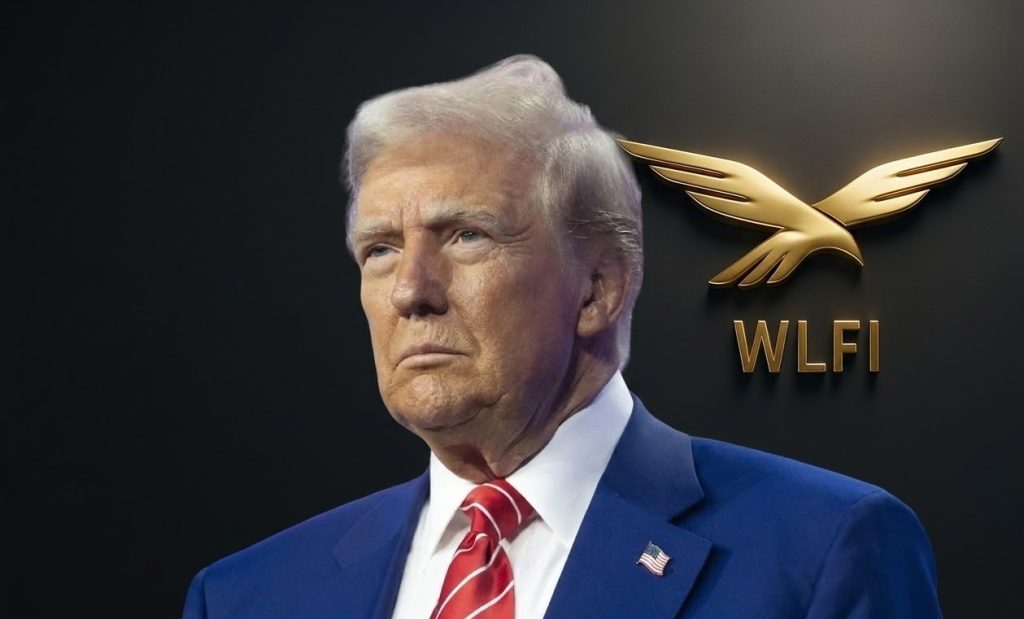
World Liberty Financial (WLFI), a cryptocurrency project linked to US President Donald Trump’s family, is once again at the center of controversy due to a new proposal that could affect investors’ governance rights.
The new regulation proposed by the project includes a mechanism that could reduce the voting power of early investors and alter their influence on decisions regarding token unlocking.
The proposal presented by the project targets currently freely tradable tokens. These “unlocked” WLFI tokens, representing approximately 20% of the total supply, will require holders to stake their tokens for at least 180 days to retain voting rights. During this period, the tokens will be locked, and investors will receive a 2% annual return in WLFI tokens. However, this return rate may be changed at the discretion of the project team.
While staking is a common practice in the crypto sector, WLFI’s proposal creates a complex situation for investors. This is because the governance decisions investors will vote on include when locked tokens will be released. Therefore, to have more say in the release process of their locked tokens, investors will also need to lock their liquid tokens, which are currently their only available asset for sale.
WLFI investor Morten Christensen stated that he plans to vote against the proposal, adding that investors are participating in the project with a great deal of uncertainty. Christensen was previously among those invited to an event organized by Trump for memecoin investors.
Since Trump’s inauguration for his second term, his family’s crypto projects have frequently been the target of criticism. A memecoin launched shortly before Trump took office allegedly provided significant gains for early investors, while later investors reportedly suffered substantial losses. Additionally, a related stablecoin initiative sparked conflict of interest debates in Congress.
In the crypto sector, investors are usually provided with an unlock schedule before a token sale. This schedule clearly outlines when and in what quantities the locked tokens will be released. However, WLFI has not shared such a schedule, even though more than a year has passed since its initial token sale. Approximately 80% of the tokens held by the initial investors are still locked.
Lex Sokolin, a token economics expert and managing partner at Generative Ventures, stated that this situation is unusual and that transparency regarding the token key release schedule is critical for investors.
The price of the WLFI token has lost more than 50% of its value since some of the tokens began trading last year. Critics suggest that the staking offer is intended to support the price by reducing selling pressure, a claim the project team denies. In a statement released on March 5th, the project argued that governance decisions should reflect the views of long-term participants rather than short-term speculators.
The voting process began on March 5th and will end on March 12th. While discussions at the project’s governance forum showed a division among investors, approximately 99% of token holders who have voted so far support the proposal. Out of a total supply of approximately 100 billion tokens, 1.4 billion have participated in the vote.
*This is not investment advice.